Contactless Payments for Small Businesses Selling Abroad
- October 06, 2026· Article by Maria Jones
- Business , contactless payments
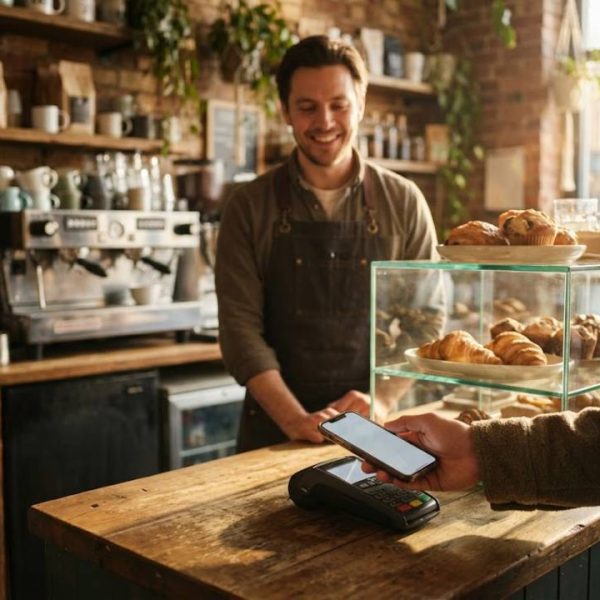
Tap, beep, done. In just a few years, paying by phone or contactless card has gone from novelty to habit across much of the world. Customers expect it in cafes, taxis, market stalls and online checkouts. For small businesses, accepting mobile payments is no longer optional. It is part of offering a smooth experience.
For businesses that serve tourists or sell to other countries, payments also have an international side. The easier and more familiar your checkout feels to foreign customers, the more likely they are to complete a purchase.
How NFC Payments Work
Near Field Communication, or NFC, lets two devices exchange data when they are a few centimetres apart. When a customer holds a phone or card near a terminal, the payment details are transmitted securely. Mobile wallets replace the real card number with a token, so the merchant never sees the actual card details. Biometric authentication on the phone adds another layer of security.
Why Customers Prefer Contactless
- Speed: a tap takes a second or two.
- Hygiene: no need to touch shared keypads.
- Convenience: no wallet needed, just a phone or watch.
- Security: tokenisation and biometrics protect card data.
Choosing a Payment Solution
Small businesses can choose from traditional bank terminals, compact card readers that connect to a smartphone, or even "tap to pay" apps that turn a regular phone into a payment terminal. Compare transaction fees, monthly costs, payout speed and integration with your accounting or point-of-sale software.
Payments Across Borders
Tourists often pay with foreign cards. Most terminals handle this automatically, but fees and currency conversion can confuse both sides. Dynamic currency conversion, where customers choose to pay in their home currency, is often more expensive for them. Clear information at the till helps build trust.
In Europe, payment rules are harmonised to a large extent. The European Central Bank explains how the euro payments area works and how instant payments are changing the market for businesses and consumers.
Selling Online to Other Countries
For online shops, mobile wallets and one-click checkout options dramatically improve conversion, especially on smartphones. But language plays a big role too. Customers abandon checkouts when they do not understand delivery terms, return policies or payment confirmations.
Translating checkout pages, payment emails and terms properly is a smart investment. French customers expect clear, formal language around money and contracts, so professional french translation services help avoid wording that sounds careless. German customers value precision and complete information about fees, data protection and cancellation rights, which makes reliable german translation services just as valuable.
Small businesses planning to sell beyond their home market often work with business translation services to prepare the full customer journey in each target language. Product descriptions, checkout flows, terms and conditions and support pages all need to read naturally to foreign buyers. A business translation team that understands ecommerce conventions can adapt tone and terminology for each market while keeping the brand consistent. This investment pays for itself quickly when international shoppers complete purchases instead of abandoning their carts.
Keeping Payment Content Consistent
Payment flows contain many small pieces of text: button labels, error messages, receipts, refund notices and app notifications. When a business supports several languages, these texts multiply quickly. An online translation management system keeps all of them organised, so a change to your refund policy is updated in every language at once, not forgotten in one of them.
Security and Fraud Prevention
Contactless payments are among the most secure options available, but businesses still need good practices. Keep terminals and apps updated, train staff to spot suspicious behaviour and use the fraud tools offered by your payment provider. For online sales, strong customer authentication rules in Europe add an extra verification step for many transactions.
Loyalty and Data
Digital payments open the door to digital loyalty programmes. Some systems link rewards automatically to the payment card or phone, so customers collect points without a separate card. Businesses gain insights into busy times, popular products and returning customers, while respecting privacy rules.
What Comes Next
Payment innovation continues. Instant bank transfers at the checkout, wearable payments, biometric cards and digital wallets for identity documents are spreading. Small businesses do not need to adopt everything at once, but staying informed helps them choose the right tools at the right time.
Setting Up in a Few Steps
Getting started is usually simple. Open a merchant account with a payment provider, verify your business details, order a reader or activate tap to pay on a compatible phone, and connect payouts to your business bank account. Test a few small transactions before your first busy day, and make sure staff know how to issue refunds. Many providers offer same-day setup, so a market stall or pop-up shop can be ready within hours.
Accessibility at the Till
Contactless payment can make life easier for customers with limited mobility or visual impairments, since there is no PIN pad to navigate for smaller amounts. Businesses can go further by placing terminals within easy reach, offering audio feedback and training staff to help without taking over. For tourists and older customers who are less familiar with mobile wallets, a friendly explanation and a simple sign showing accepted methods remove hesitation at the moment of payment.
The Simple Conclusion
Contactless payments are now an expectation, not a bonus. Businesses that combine fast, secure payments with clear information in their customers' languages turn first-time visitors into returning buyers.
Contactless payments are now an expectation, not a bonus. Businesses that combine fast, secure payments with clear information in their customers' languages turn first- time visitors into returning buyers.